
Introduction
In the realm of modern construction, pipelines play a pivotal role that extends far beyond mere conduits for fluids or gases. They are integral components in ensuring the structural integrity, safety, and efficiency of various construction projects, ranging from skyscrapers to underground tunnels. This article delves into the innovative pipeline solutions that are revolutionizing the construction industry, focusing on sonic logging pipes, grouting pipes, and tunnel support systems.
1.Sonic Logging Pipes: Precision in Concrete Analysis
In the ever - evolving landscape of construction engineering, the quest for methods to accurately assess the quality and integrity of concrete structures has been a long - standing challenge. Sonic logging pipes, also recognized as steel sonic logging pipes or concrete pile foundation sonic pipes, have emerged as a groundbreaking solution that seamlessly blends advanced technology with traditional construction practices. These specialized pipes have revolutionized the way engineers approach non - destructive testing (NDT) of concrete, offering unparalleled precision and insights into the internal condition of concrete elements such as piles and foundations.
1.1 The Fundamental Principle: Ultrasonic Waves in Concrete Assessment
At the heart of sonic logging pipes lies the principle of ultrasonic wave propagation. Ultrasonic waves, which are high - frequency sound waves beyond the range of human hearing (typically above 20 kHz), have unique properties that make them ideal for concrete analysis. When these waves travel through a homogeneous and intact concrete medium, they follow a relatively straight path with a consistent speed. However, when they encounter a flaw or defect within the concrete, such as a crack, void, or inclusion, their behavior changes dramatically.
The presence of a defect causes the ultrasonic waves to be reflected, refracted, or scattered. This alteration in the wave's path and energy distribution is the key to detecting and characterizing the defect. By carefully measuring parameters such as the time of flight (the time it takes for the wave to travel from the transmitter to the receiver), amplitude (the strength of the received wave), and frequency content (the range of frequencies present in the wave), engineers can gain valuable information about the size, shape, location, and nature of the defect within the concrete.
1.2 Sonic Logging Pipes: The Enablers of Ultrasonic Testing in Concrete
Sonic logging pipes serve as the conduits through which ultrasonic waves are transmitted and received within the concrete structure. These pipes are typically made of high - quality steel, which offers several advantages. Steel is durable and can withstand the harsh conditions often encountered during construction, including high pressures, mechanical stresses, and exposure to chemicals. It also has good acoustic properties, allowing ultrasonic waves to propagate through it with minimal energy loss.
The pipes are strategically embedded within the concrete during the casting process. For example, in the case of concrete piles, multiple sonic logging pipes are inserted into the formwork before the concrete is poured. The pipes are arranged in a specific pattern, usually in a vertical or inclined orientation, depending on the pile's design and the testing requirements. Once the concrete has set and cured, the pipes become an integral part of the structure, providing access points for ultrasonic testing equipment.
1.3 Traditional Ultrasonic Testing Methods and Their Limitations
Before the widespread adoption of sonic logging pipes, traditional ultrasonic testing methods in concrete faced several limitations. One common approach was the single - transducer method, where a single ultrasonic transducer was used to both transmit and receive the waves. This method required direct contact between the transducer and the concrete surface, which could be difficult to achieve in some situations, especially for deep or inaccessible concrete elements. Additionally, the accuracy of the results was often affected by factors such as surface roughness, coupling medium quality, and the presence of near - surface defects.
Another traditional method was the impact - echo technique, which involved striking the concrete surface with a hammer or other impact device and measuring the resulting acoustic emissions. While this method could provide some information about the concrete's internal condition, it was relatively crude and lacked the precision and detail offered by ultrasonic testing using sonic logging pipes. It was also more susceptible to external noise and interference, which could lead to inaccurate results.
1.4 The Advent of CSL Technology: A Game - Changer in Concrete Testing
The introduction of Cross - Hole Sonic Logging (CSL) technology marked a significant milestone in the field of concrete testing. CSL takes advantage of the multiple sonic logging pipes embedded within the concrete structure to perform a more comprehensive and accurate assessment.
In a CSL test, ultrasonic transducers are inserted into pairs of sonic logging pipes at different locations within the concrete. Sound waves are then transmitted from one transducer to the other through the concrete. By systematically moving the transducers along the length of the pipes and repeating the transmission and reception process at multiple points, a large amount of data is collected.
This data is then processed using sophisticated software algorithms to create a detailed, three - dimensional map of the concrete's internal condition. The map can reveal the presence and location of any flaws or defects, such as cracks, voids, or areas of low - quality concrete. Engineers can use this information to make informed decisions about the need for repairs, reinforcements, or further investigation.
CSL technology offers several advantages over traditional ultrasonic testing methods. It provides a more accurate and detailed assessment of the concrete's internal condition, as it can detect defects that may be missed by single - transducer or impact - echo methods. It is also less affected by surface conditions and external noise, as the sound waves travel through the concrete via the sonic logging pipes rather than through the air or direct contact with the surface. Furthermore, CSL tests can be performed relatively quickly and efficiently, especially when compared to some traditional methods that may require extensive surface preparation or multiple test setups.
In conclusion, sonic logging pipes have opened up a new era in concrete analysis, enabling engineers to gain unprecedented insights into the internal condition of concrete structures. The combination of ultrasonic wave technology and the strategic placement of these specialized pipes, along with the advancements brought about by CSL technology, has transformed non - destructive testing in construction. In the next part, we will delve deeper into the practical applications of sonic logging pipes in various construction projects and explore the future trends in this exciting field.[Link to The Science Behind Sonic Logging Pipes: How Ultrasonic Waves Reveal Concrete Secrets]
2. Grouting Pipes: Ensuring Structural Stability
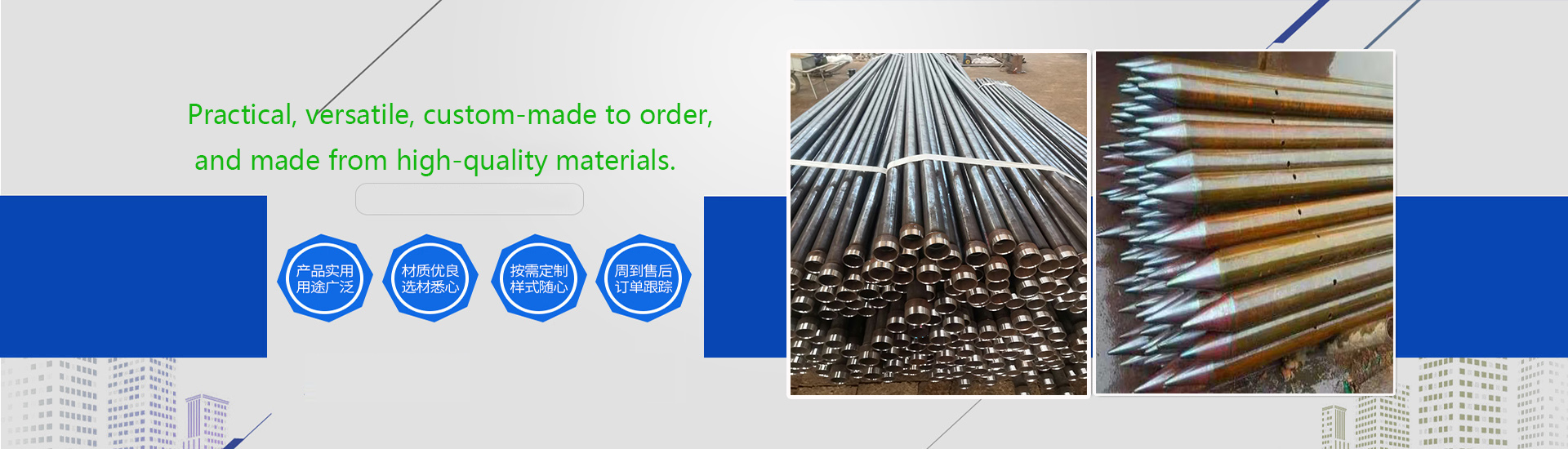
Grouting pipes, encompassing both perforated grouting pipes and steel grouting injection pipes, stand as indispensable tools in the realm of construction, playing a pivotal role in reinforcing and stabilizing a myriad of structural elements. Their significance is particularly pronounced in scenarios where the integrity of a structure is threatened by voids, cracks, or loose soil, conditions that can severely compromise its load - bearing capacity and resistance to settlement or movement.
The fundamental principle underlying the operation of grouting pipes is the injection of grout—a carefully formulated mixture of cement, water, and various additives—into these problematic areas. Once injected, the grout begins to fill the voids and cracks, gradually solidifying to form a continuous, monolithic mass. This process not only restores the structural integrity of the affected element but also enhances its overall strength and stability, enabling it to better withstand the forces exerted upon it.
In the context of tunnel construction, the importance of grouting pipes cannot be overstated. Tunnels, by their very nature, are subjected to a unique set of challenges that can jeopardize their safety and longevity. The excavation process often disturbs the surrounding rock or soil, creating voids and fractures that can lead to instability. Additionally, the presence of water can further exacerbate these issues, causing erosion and weakening the tunnel's lining. Grouting pipes offer an effective solution to these problems by providing a means to stabilize the tunnel lining, prevent water ingress, and reinforce the surrounding substrate.[Link to Perforated Grouting Pipes: The Key to Uniform Reinforcement in Construction]
Perforated grouting pipes, in particular, have revolutionized the grouting process in tunnel construction. These pipes are characterized by their evenly spaced holes, which allow for the uniform distribution of grout throughout the treated area. This uniformity is crucial for ensuring comprehensive coverage and optimal reinforcement, as it prevents the formation of weak spots or areas of insufficient grout penetration. By creating a solid, continuous barrier, perforated grouting pipes help to seal off potential pathways for water ingress, thereby protecting the tunnel from the damaging effects of moisture.
The benefits of using perforated grouting pipes extend beyond mere structural reinforcement. Their design also facilitates easier and more efficient grouting operations. The evenly spaced holes enable the grout to flow freely and evenly, reducing the risk of blockages or uneven distribution. This, in turn, minimizes the need for repeated injections or adjustments, saving both time and resources. Moreover, the use of perforated grouting pipes can enhance the overall quality of the grouting job, as the uniform distribution of grout ensures that every part of the treated area receives an equal amount of reinforcement.
Steel grouting injection pipes, on the other hand, offer a different set of advantages. These pipes are typically made from high - strength steel, which provides them with the durability and resilience needed to withstand the harsh conditions often encountered in construction sites. Their robust construction makes them suitable for use in areas where high - pressure grouting is required, as they can withstand the forces exerted by the injected grout without deforming or breaking. Additionally, steel grouting injection pipes can be customized to meet specific project requirements, such as length, diameter, and hole pattern, providing greater flexibility and adaptability.
The application of grouting pipes is not limited to tunnel construction alone. They are also widely used in a variety of other construction scenarios, including the stabilization of foundations, the repair of damaged concrete structures, and the reinforcement of retaining walls. In each of these cases, grouting pipes offer a cost - effective and efficient solution for addressing structural issues and ensuring the long - term stability of the built environment.
In conclusion, grouting pipes, whether perforated or steel injection types, are essential components in the construction industry's arsenal for ensuring structural stability. Their ability to inject grout into voids, cracks, and loose soil, creating a solid, monolithic mass, makes them invaluable in reinforcing and stabilizing a wide range of structural elements. In tunnel construction, their role is particularly vital, as they help to stabilize the tunnel lining, prevent water ingress, and reinforce the surrounding rock or soil. As construction technology continues to advance, we can expect to see further innovations and improvements in grouting pipe design and functionality, further enhancing their effectiveness and expanding their range of applications.[Link to Innovative Grouting Techniques: Beyond Traditional Perforated Pipes]
3.Tunnel Support Systems: Safeguarding Underground Passages
Tunnel construction stands as a testament to human ingenuity, enabling us to traverse mountains, cross beneath rivers, and connect cities separated by vast distances. However, this remarkable feat of engineering is not without its challenges. Among these, ensuring the stability and safety of the underground passage is paramount. Tunnel support systems, particularly tunnel roof support pipes like those employed in pipe umbrella systems and forepoling pipes, emerge as critical components in this endeavor, providing the necessary reinforcement to prevent collapses and safeguard the lives of workers and future users.[Link to Tunnel Roof Support Pipes: Ensuring Safety in Underground Excavations]
3.1 The Imperative for Tunnel Support
The very nature of tunnel construction involves excavating through varying geological conditions, from solid rock to loose soil. Each type of terrain presents its own set of challenges, with the potential for ground movement, water ingress, and structural instability. In such an environment, the risk of tunnel collapse is a constant threat, capable of causing catastrophic consequences. Therefore, the implementation of robust tunnel support systems is not merely a matter of construction efficiency; it is a fundamental requirement for ensuring the safety and longevity of the tunnel.
Tunnel roof support pipes serve as the first line of defense against these risks. By providing temporary or permanent support above the tunnel excavation, they help to distribute the load exerted by the overlying rock or soil, preventing excessive stress on any single point. This, in turn, reduces the likelihood of fractures, cracks, or complete collapses, creating a safer working environment for construction crews and a more reliable passage for future users.
3.2 Pipe Umbrella Systems: A Canopy of Protection
One of the most innovative and effective tunnel support systems is the pipe umbrella system. As the name suggests, this system consists of multiple pipes arranged in an umbrella-like pattern above the tunnel face. These pipes, typically made of high-strength steel or other durable materials, are anchored deeply into the surrounding rock or soil using specialized anchoring techniques. Once in place, they form a sturdy canopy that spans the width of the tunnel excavation, providing comprehensive support and protection.
The beauty of the pipe umbrella system lies in its ability to distribute the load evenly across a wide area. As the tunnel is excavated, the overlying rock or soil exerts pressure on the canopy, which in turn transfers this force to the anchored pipes. The pipes, being firmly embedded in the ground, resist this pressure, preventing the rock or soil from collapsing onto the tunnel face. This not only ensures the safety of the workers but also allows for more efficient excavation, as the tunnel face remains stable and free from loose material.
Moreover, the pipe umbrella system is highly adaptable to different geological conditions. By adjusting the spacing, length, and diameter of the pipes, engineers can tailor the system to suit the specific requirements of each tunnel project. This flexibility makes it an ideal choice for a wide range of tunneling applications, from small utility tunnels to large-scale infrastructure projects.
3.3 Forepoling Pipes: Pioneering Support in Advance
While pipe umbrella systems provide comprehensive support above the tunnel face, forepoling pipes offer a different approach by providing immediate support in advance of the excavation. These pipes, also typically made of steel, are installed ahead of the tunneling operation, often at an angle that matches the direction of excavation. As the tunnel progresses, the forepoling pipes act as a series of mini-anchors, reinforcing the ground in front of the tunnel face and preventing it from collapsing.
The use of forepoling pipes is particularly beneficial in soft or unstable ground conditions, where the risk of collapse is higher. By installing these pipes in advance, engineers can create a more stable working environment, reducing the need for constant adjustments and repairs. This not only improves safety but also enhances efficiency, as the tunneling operation can proceed more smoothly and quickly.
Forepoling pipes also offer the advantage of being relatively easy to install and remove. Unlike some other tunnel support systems, which may require extensive excavation or drilling, forepoling pipes can often be installed using specialized equipment that minimizes disruption to the surrounding ground. Similarly, once the tunneling operation is complete, the pipes can be removed and reused in other projects, making them a cost-effective and sustainable choice.
3.4 Synergy Between Pipe Umbrella Systems and Forepoling Pipes
While both pipe umbrella systems and forepoling pipes offer unique advantages in tunnel support, their true power lies in their ability to work together synergistically. By combining these two systems, engineers can create a multi-layered support structure that provides comprehensive protection against collapses and instability.
In a typical scenario, forepoling pipes would be installed in advance of the tunneling operation to provide immediate support in soft or unstable ground. As the tunnel progresses, a pipe umbrella system would be installed above the tunnel face to provide additional reinforcement and distribute the load evenly. This combination ensures that the tunnel remains stable throughout the excavation process, reducing the risk of accidents and delays.
Moreover, the use of both systems in tandem allows for greater flexibility in tunnel design. By adjusting the spacing and configuration of the pipes, engineers can create a support structure that is tailored to the specific geological conditions of each tunnel project. This adaptability is crucial in ensuring the success of tunneling operations in diverse and challenging environments.
3.5 Future Trends and Innovations
As technology continues to advance, the field of tunnel support systems is poised for further innovation and improvement. One area of focus is the development of smarter, more automated support systems that can monitor ground conditions in real-time and adjust their support levels accordingly. By incorporating sensors and advanced analytics, these systems could provide even greater safety and efficiency in tunnel construction.
Another area of innovation is the use of new materials and manufacturing techniques to create stronger, lighter, and more durable tunnel support pipes. By exploring alternative materials such as composites or advanced alloys, engineers could develop pipes that offer superior performance while reducing the overall weight and cost of the support system.
Furthermore, the integration of tunnel support systems with other tunneling technologies, such as tunnel boring machines (TBMs) and advanced excavation techniques, could lead to even more efficient and cost-effective tunneling operations. By optimizing the interaction between these different components, engineers could create a seamless and integrated tunneling process that minimizes disruption and maximizes productivity.
In the realm of tunnel construction, the stability and safety of the underground passage are of utmost importance. Tunnel support systems, particularly tunnel roof support pipes like those used in pipe umbrella systems and forepoling pipes, play a critical role in ensuring these objectives are met. By providing temporary or permanent support above the tunnel excavation, these pipes help to distribute the load, prevent collapses, and safeguard the lives of workers and future users.
As technology continues to evolve, we can expect to see even more innovative and effective tunnel support systems emerge. By embracing these advancements and integrating them into our tunneling operations, we can create safer, more efficient, and more sustainable underground passages that connect our world in new and exciting ways. The future of tunnel construction is bright, and tunnel support systems will undoubtedly remain at the forefront of this exciting field.
Conclusion
The construction industry is constantly evolving, driven by technological advancements and the need for safer, more efficient structures. Innovative pipeline solutions, such as sonic logging pipes, grouting pipes, and tunnel support systems, are at the forefront of this evolution. By leveraging these cutting-edge technologies, engineers and constructors can ensure the structural integrity, safety, and longevity of their projects, paving the way for a more sustainable and resilient built environment.

admin
No comments for this content