
Introduction
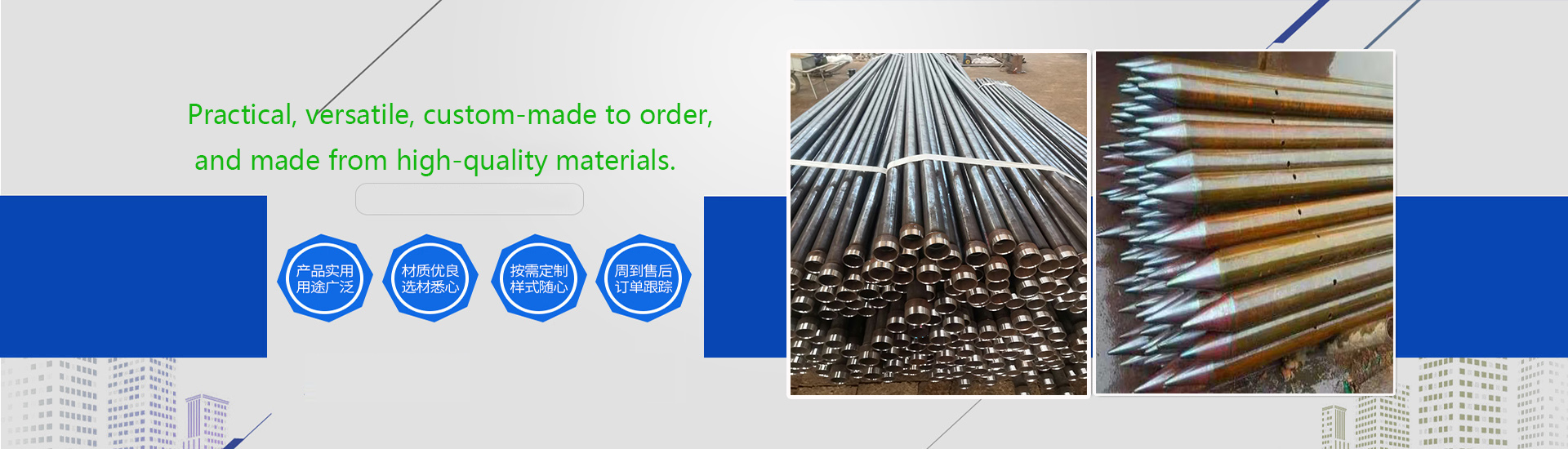
In the dynamic and ever-evolving construction industry, the stability and load-bearing capacity of soil are paramount to the success and longevity of any project. Whether it's a towering skyscraper, a sprawling bridge, or an intricate tunnel system, the foundation upon which these structures rest must be solid and reliable. Perforated grouting pipes, an innovative extension of sonic test tube technology, have emerged as a game-changer in the realm of soil stabilization and reinforcement. This article delves into the myriad benefits, diverse applications, and meticulous installation techniques associated with perforated grouting pipes, shedding light on their pivotal role in modern construction.
1.Benefits of Perforated Grouting Pipes
1.1 Precise Grout Injection
One of the standout features of perforated grouting pipes is their ability to facilitate the precise injection of cementitious or chemical grouts into the soil. The perforations along the length of the pipe are strategically designed to allow grout to seep out gradually and uniformly, ensuring thorough penetration into voids, fractures, and weak zones within the soil. This precision is crucial as it prevents over-grouting in some areas and under-grouting in others, leading to a more balanced and effective soil reinforcement process.
1.2 Enhanced Soil Cohesion
The grouting process, enabled by perforated pipes, significantly improves soil cohesion. As the grout fills the voids and binds the soil particles together, it creates a more cohesive and stable mass. This enhanced cohesion is essential for structures that rely on the soil for support, as it reduces the likelihood of soil movement and settlement, which can compromise the integrity of the structure above.
1.3 Improved Soil Strength
By filling voids and reinforcing weak zones, perforated grouting pipes contribute to an overall increase in soil strength. This is particularly beneficial in areas with loose or sandy soils that lack the natural cohesion and stability required to support heavy loads. The grouted soil becomes more resistant to deformation and failure, providing a solid foundation for construction projects.
1.4 Reduced Settlement
Settlement is a common issue in construction, particularly in areas with soft or compressible soils. Perforated grouting pipes help mitigate this problem by stabilizing the soil and reducing its compressibility. As the grout cures and hardens, it creates a rigid matrix within the soil, preventing excessive settlement and ensuring that the structure remains level and stable over time.
1.5 Increased Bearing Capacity
The improved soil strength and reduced settlement achieved through the use of perforated grouting pipes translate into an increased bearing capacity. This means that the soil is better able to support the loads imposed by structures, reducing the risk of structural failure or damage. For foundations, retaining walls, and slope stabilization projects, this increased bearing capacity is of utmost importance.
2.Applications
2.1 High-Rise Buildings
In the construction of high-rise buildings, the stability of the soil beneath the foundation is critical. Perforated grouting pipes are used to stabilize the soil, ensuring that the immense weight of the structure is evenly distributed and supported. This is particularly important in urban areas where space is limited, and buildings must be constructed on compact or reclaimed land.(Back to“1.1 Sonic Test Tubes for High-Rise Building Pile Foundations”)
2.2 Infrastructure Projects
Bridges and tunnels are two types of infrastructure projects that benefit greatly from the use of perforated grouting pipes. For bridges, these pipes are employed to reinforce the soil around the foundations and abutments, preventing erosion and maintaining structural integrity. In tunnel construction, perforated grouting pipes are used to stabilize the soil around the tunnel bore, reducing the risk of collapses and ensuring worker safety.
2.3 Slope Stabilization
Slope stabilization is another area where perforated grouting pipes find widespread use. In hilly or mountainous regions, slopes are prone to landslides and erosion, posing a significant threat to nearby structures and communities. Perforated grouting pipes are used to inject grout into the slope face, increasing its shear strength and reducing the likelihood of slope failure. This application is particularly important in areas prone to heavy rainfall or seismic activity.(Back to“1.2 Plastic Acoustic Testing Tubes for Small-Scale Civil Engineering”)
2.4 Underground Constructions
Underground constructions, such as basements, parking garages, and subway systems, also benefit from the use of perforated grouting pipes. These pipes are used to stabilize the soil around the excavation, preventing soil movement and ensuring the safety of workers and nearby structures. Additionally, perforated grouting pipes can be used to create waterproof barriers, preventing water infiltration into the underground space.
3.Installation Techniques
3.1 Selecting the Right Pipe Size
The first step in the installation process is selecting the appropriate pipe size. This decision is based on the specific soil conditions and project requirements. Larger pipes are typically used in areas with larger voids or weaker soils, while smaller pipes may be sufficient for more stable soils. The pipe size must also be compatible with the drilling equipment and injection techniques being used.
3.2 Choosing the Perforation Pattern
The perforation pattern on the grouting pipe is another critical factor to consider. The size, shape, and spacing of the perforations will influence the flow rate and distribution of the grout within the soil. A denser perforation pattern may be required in areas with smaller voids or more complex soil structures, while a sparser pattern may be sufficient for larger voids or more uniform soils.
3.3 Selecting the Grout Mixture
The choice of grout mixture is also crucial to the success of the grouting process. Cementitious grouts, which are made from cement and water, are commonly used for soil stabilization projects. However, chemical grouts, which are made from polymers or other synthetic materials, may be more suitable for certain applications, such as waterproofing or sealing fractures. The grout mixture must be carefully selected based on the soil conditions, project requirements, and desired outcome.
3.4 Employing Correct Drilling Techniques
Proper drilling techniques are essential for ensuring that the grouting pipes are installed correctly. The drilling equipment must be capable of creating holes of the appropriate size and depth, and the drilling process must be monitored to ensure that the holes are vertical and aligned correctly. Additionally, the drilling process must be carried out in a manner that minimizes soil disturbance and prevents the collapse of the hole walls.
3.5 Injecting the Grout
Once the grouting pipes are in place, the grout is injected into the soil through the perforations. The injection process must be carefully controlled to ensure that the grout is distributed evenly and that the desired level of soil improvement is achieved. This may involve adjusting the injection pressure, flow rate, and duration based on the soil conditions and project requirements. Monitoring the grouting process is essential to verify that the grout is flowing correctly and that the desired outcome is being achieved.
Conclusion
Perforated grouting pipes represent a significant advancement in soil stabilization and reinforcement technology. Their ability to facilitate precise grout injection, enhance soil cohesion, improve soil strength, reduce settlement, and increase bearing capacity makes them an invaluable tool in the construction industry. From high-rise buildings to infrastructure projects, slope stabilization, and underground constructions, the applications of perforated grouting pipes are diverse and widespread. By employing correct installation techniques, engineers can maximize the effectiveness of these pipes, ensuring the success and longevity of their construction projects. As the construction industry continues to evolve and face new challenges, perforated grouting pipes will undoubtedly play a pivotal role in shaping the future of soil stabilization and reinforcement.

admin
No comments for this content