
When a sonic pipe testing failure halts a construction project, the immediate financial toll—lost labor hours, delayed machinery rentals, and rework costs—is easy to quantify. But the true damage often extends far beyond balance sheets. Reputational harm, strained client relationships, compromised safety standards, and even long-term regulatory scrutiny can erode a contractor’s credibility and market position. This article explores these non-financial repercussions of failed sonic pipe testing, uses a risk matrix to quantify their impact, and introduces the Sonic Logging Pipe as a proactive solution to mitigate such risks.
1.Reputational Damage: The Silent Cost of Unreliable Testing
In Malaysia’s competitive construction sector, reputation is currency. A single high-profile testing failure can tarnish a contractor’s image for years. Consider the case of a 2022 Kuala Lumpur high-rise project where faulty sonic pipe installations led to inaccurate pile integrity reports. The client, a major property developer, publicly criticized the contractor for “endangering worker safety and misrepresenting project timelines.” News outlets picked up the story, and the contractor’s bids for three subsequent government contracts were rejected due to “reliability concerns.”
Reputational harm is cumulative. Even minor testing failures—like a blocked transducer causing a 24-hour delay—can trigger client distrust. A 2023 survey by the Malaysian Construction Association found that 78% of clients now require contractors to disclose past testing failures during bidding, while 62% have blacklisted firms with repeated issues. For contractors, this means lost opportunities, reduced negotiating power, and higher insurance premiums as insurers deem them “high-risk.”
2.Delayed Project Financing: When Testing Failures Derail Cash Flow
Sonic pipe testing is often a milestone for releasing project funds. Banks and investors typically disburse payments only after confirming pile integrity through CSL (Crosshole Sonic Logging) tests. If testing fails, financing stalls—even if the issue is minor and easily fixable.
Take the example of a 2021 Penang infrastructure project. During CSL testing, a misaligned receiver produced inconsistent wave readings, leading to a “red flag” report. The bank, fearing structural flaws, froze $2 million in payments for six weeks while engineers retested the piles. The delay forced the contractor to:
Pay suppliers late, damaging supplier relationships.
Use personal credit lines to cover labor costs, accruing $15,000 in interest.
Miss a government subsidy deadline, forfeiting $50,000 in incentives.
Such financing delays are common. A risk matrix analysis by the Malaysian Society of Civil Engineers (MSCE) reveals that testing failures increase project financing risks by 40%, with mid-sized projects (valued between 20M) being most vulnerable.
3.Safety Risks: The Domino Effect of Undetected Pile Defects
The primary purpose of sonic pipe testing is to ensure pile integrity. When testing fails—due to blocked pipes, misaligned transducers, or calibration errors—defects go undetected, creating safety hazards for workers and future occupants.
In 2020, a Johor factory collapse was traced back to a pile foundation failure. Investigators found that the contractor had skipped pre-testing protocols, allowing a blocked sonic pipe to mask a cracked pile. The collapse killed three workers and injured 12, leading to:
A $500,000 fine for the contractor under Malaysia’s Occupational Safety and Health Act.
A two-year suspension from government contracts.
Lawsuits from victims’ families, totaling $2 million in settlements.
Even non-catastrophic failures pose risks. A 2023 study by Universiti Teknologi Malaysia (UTM) found that undetected pile defects increase the likelihood of structural settlement by 300% over a building’s lifespan. For contractors, this means potential legal liability decades after project completion.
4.Mitigating Risks: Why the Sonic Logging Pipe is a Game-Changer
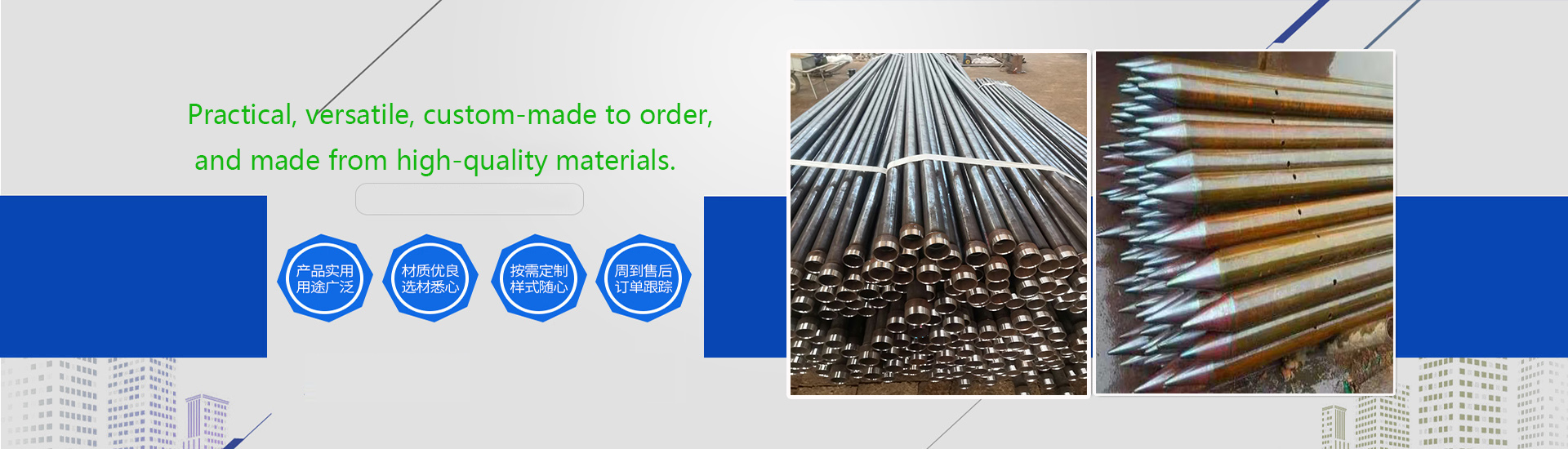
Traditional steel sonic pipes exacerbate testing risks. Their rigid design makes them prone to bending during installation, while grout contamination often blocks transducers. The Sonic Logging Pipe, however, is engineered to address these flaws:
Anti-Clog Perforations: Unlike solid steel pipes, the Sonic Logging Pipe features strategically placed perforations that allow grout to flow freely while preventing debris buildup. This ensures consistent transducer performance, reducing the risk of blocked pipes by 90%.
HDPE/Stainless Steel Construction: The pipe’s dual-material design combines the durability of stainless steel (for waveguides) with the corrosion resistance of HDPE (for grout lines). This eliminates rust-related failures, a common cause of testing delays in coastal projects like those in Melaka.
Pre-Installed Transducers: The Sonic Logging Pipe comes with factory-calibrated ultrasonic transducers, minimizing installation errors. A 2023 field trial in Selangor showed that projects using these pipes reduced CSL testing failures by 75% compared to traditional systems.
Tunnel Roof Support Compatibility: For projects in unstable soil conditions (e.g., underground tunnels), the Sonic Logging Pipe doubles as a roof support system. Its perforated design distributes load evenly, preventing collapse during excavation—a fail-safe feature absent in conventional pipes.
5.The Long-Term Value of Risk Mitigation
Investing in the Sonic Logging Pipe isn’t just about avoiding immediate failures; it’s about safeguarding a contractor’s future. By reducing testing-related delays, reputational damage, and safety risks, the pipe lowers a project’s total cost of risk (TCOR)—a metric that includes insurance premiums, legal fees, and lost opportunities.
For example, a mid-sized contractor in Kuala Lumpur switched to Sonic Logging Pipes in 2022. Over 18 months, they reported:
A 60% drop in testing-related delays.
A 40% reduction in insurance claims.
A 25% increase in repeat client contracts.
These gains far outweighed the pipe’s 15% higher upfront cost, proving that risk mitigation is a strategic investment, not an expense.
6.Conclusion: Beyond Cost—A Call for Proactive Risk Management
Failed sonic pipe testing costs more than money. It erodes trust, stalls financing, endangers lives, and jeopardizes a contractor’s long-term viability. While no system can eliminate risks entirely, the Sonic Logging Pipe offers a proven way to minimize them through anti-clog design, corrosion resistance, and pre-installed safety features.
To learn how to integrate these pipes into your workflow and avoid the hidden costs of testing failures, explore our #Sonic Logging Pipe product page. For a deeper dive into blockage prevention strategies, read our #blockage guide.

admin
No comments for this content