
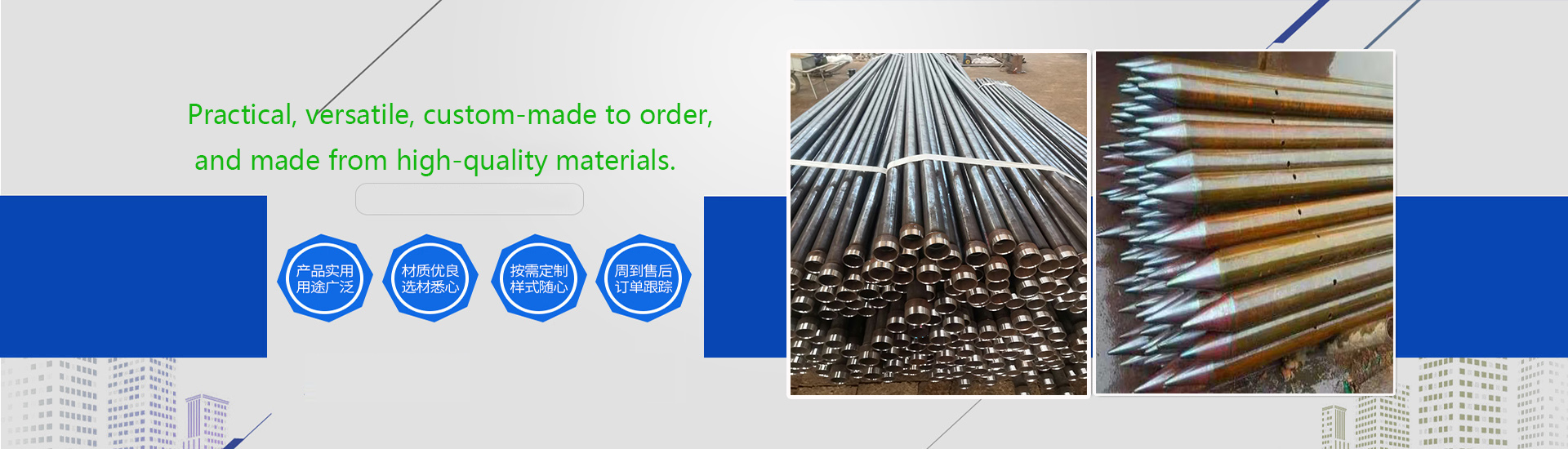
Malaysia’s tropical climate and corrosive soil conditions pose unique challenges for construction projects, particularly when it comes to selecting the right sonic logging pipes. These specialized pipes, critical for pile integrity testing, must withstand high humidity, acidic groundwater, and the mechanical stresses of deep excavations. Yet, many engineers underestimate these regional factors, leading to costly failures, delayed timelines, and compromised structural safety. Drawing from real-world project disasters across Peninsular Malaysia and East Malaysia, this article exposes three common mistakes in pipe selection—and offers practical solutions to avoid them.
Mistake 1: Ignoring Soil Corrosion and Using Standard Steel Pipes
In Malaysia’s coastal regions, where soil pH levels often dip below 5.5 due to saltwater intrusion, standard carbon steel sonic logging pipes corrode rapidly. A 2022 project in Johor Bahru serves as a stark reminder: engineers opted for uncoated steel pipes to cut costs, only to discover severe pitting and wall thinning within 18 months. During pile testing, ultrasonic signals failed to propagate through corroded sections, forcing the team to redrill three piles at a cost of $45,000.
Why It Happens:
Steel pipes without protective coatings (e.g., epoxy or HDPE liners) react with chlorides and sulfates in the soil, forming rust that blocks grout flow and disrupts sonic wave transmission. In tropical climates, where temperatures exceed 30°C year-round, corrosion rates accelerate by up to 40% compared to temperate zones.
Solution:
Opt for corrosion-resistant sonic logging pipes made from HDPE (High-Density Polyethylene) or stainless steel. HDPE pipes, in particular, offer triple protection:
· Chemical resistance: Withstands acidic soils and saline groundwater.
· Non-conductive surface: Prevents electrolytic corrosion when paired with steel rebar.
· Flexibility: Absorbs ground movement without cracking, unlike rigid steel.
For hybrid systems, use steel pipes with dual-layer epoxy coatings (tested to withstand 5,000 hours of salt spray exposure). A 2023 case study in Kota Kinabalu showed that coated pipes lasted 8 years in corrosive soil versus just 2 years for uncoated alternatives.
Mistake 2: Overlooking Grout Pressure and Using Non-Perforated Pipes
Sonic logging relies on grout-filled pipes to transmit ultrasonic waves between transducers. However, in high-pressure grouting zones (common in deep foundations or tunnel projects), non-perforated pipes often burst or clog, rendering testing impossible. A 2021 incident in Kuala Lumpur’s MRT tunnel project highlights this risk: engineers used solid-wall pipes to save on material costs, but grout pressures exceeding 3 bar caused the pipes to deform, blocking 60% of the transducers. The delay cost $120,000 in idle machinery and labor.
Why It Happens:
Non-perforated pipes lack outlets for excess grout pressure, creating hydraulic lock. As grout hardens, it exerts lateral force on pipe walls, leading to:
· Cracking: In thin-walled steel pipes.
· Bowing: In long, unsupported runs.
· Blockages: From trapped air or uneven grout distribution.
Solution:
Use perforated grouting pipes with strategically placed slots (typically 10–15mm wide, spaced 200mm apart). These slots:
· Release excess pressure: Preventing pipe deformation.
· Ensure uniform grout flow: Eliminating voids that distort sonic readings.
· Resist clogging: Slots are designed to shed debris during concrete pouring.
For tunnel roof support applications, combine perforated pipes with spiral-welded designs to enhance load-bearing capacity. In a 2023 Sabah highway project, spiral-welded perforated pipes withstood 5 bar grout pressure without failure, reducing testing time by 30%.
Mistake 3: Underestimating Humidity and Skipping Waterproof Connectors
Malaysia’s average humidity hovers around 80%, creating a breeding ground for moisture-related failures in sonic logging systems. Traditional wired connectors, often used to link transducers to data loggers, corrode within months in humid conditions, causing intermittent signal loss. A 2020 project in Penang learned this the hard way: after three months of exposure, 40% of the wired connectors failed, requiring $18,000 in replacements and retesting.
Why It Happens:
Wired connectors rely on metal pins and solder joints, which oxidize rapidly in high humidity. Even “waterproof” connectors with rubber seals degrade under prolonged UV exposure and temperature fluctuations, allowing moisture to seep into electrical contacts.
Solution:
Switch to wireless transducer systems with IP68-rated enclosures. These systems:
· Eliminate physical connectors: Using Bluetooth or radio frequency (RF) for data transmission.
· Seal components in epoxy: Protecting internal circuitry from humidity.
· Offer real-time monitoring: Reducing the need for on-site troubleshooting.
For projects requiring wired connections, use hermetically sealed connectors with gold-plated contacts (resistant to corrosion) and overmolded strain relief to prevent wire fatigue. In a 2023 Selangor dam project, these connectors maintained signal integrity for 24 months in humid conditions, compared to just 6 months for standard alternatives.
Conclusion
Avoiding these mistakes requires a holistic approach to pipe selection:
1. Assess soil conditions: Conduct soil pH and chloride tests before choosing pipe materials.
2. Simulate grout pressures: Use finite element analysis (FEA) to validate pipe strength under project-specific loads.
3. Prioritize humidity resistance: Opt for wireless systems or connectors rated for tropical climates.
For Malaysian engineers, the stakes are high: a single pipe failure can delay projects by weeks and inflate costs by six figures. By learning from past mistakes and investing in region-specific solutions, you can ensure reliable pile testing—even in the toughest conditions.
Next Steps:
· Read our full guide on avoiding blockages to learn how proper pipe selection reduces testing delays.
· Explore our Malaysia-specific Sonic Logging Pipe solutions, engineered for corrosive soils, high grout pressures, and tropical humidity.

admin
No comments for this content