
Introduction
Underground constructions, such as tunnels and mines, are vital infrastructure components that facilitate transportation, resource extraction, and various industrial activities. However, these underground environments present unique and significant safety challenges, primarily due to the inherent risk of collapses and ground instability. The integrity of tunnel roofs is crucial; any failure can lead to catastrophic consequences, including loss of life, extensive property damage, and prolonged project delays. To mitigate these risks, tunnel roof support pipes have emerged as a reliable and effective solution for reinforcing tunnel linings and preventing accidents. This article delves into the design considerations, installation process, and numerous benefits of tunnel roof support pipes, highlighting their indispensable role in ensuring the safety and longevity of underground constructions.
1.Design Considerations
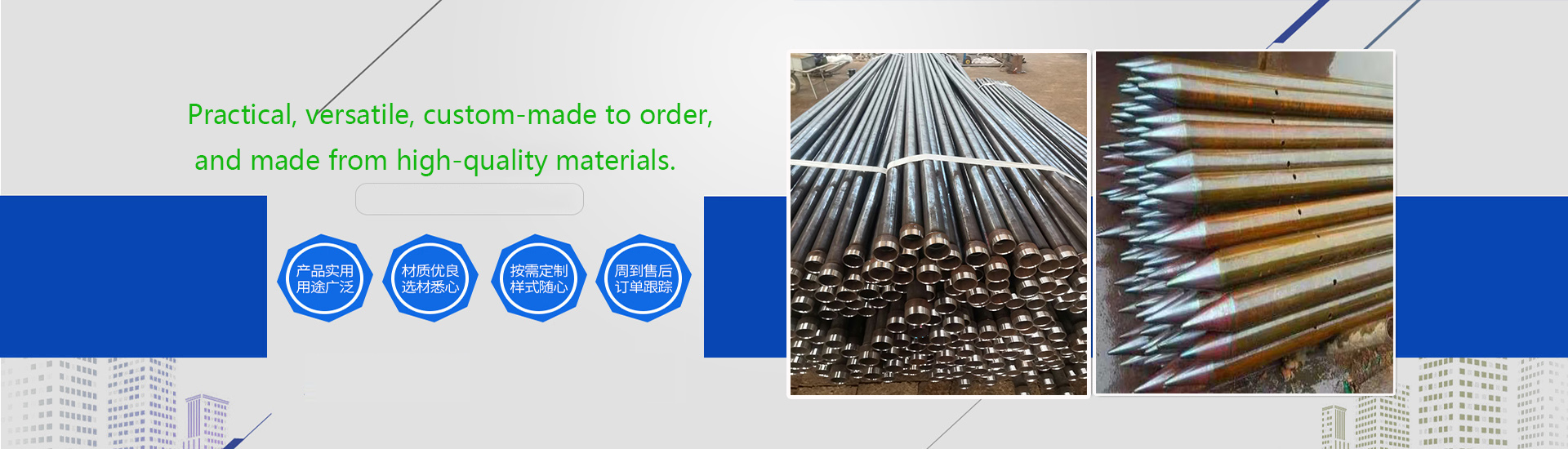
The design of tunnel roof support pipes is a meticulous process that takes into account the dynamic loads and pressures exerted by the surrounding soil and rock formations. These pipes must be robust enough to withstand the forces generated by geological movements, groundwater pressure, and the weight of overlying strata. To achieve this, they are typically constructed from high-strength materials such as steel or reinforced concrete. Steel pipes offer excellent tensile strength and ductility, making them suitable for environments where flexibility and resilience are paramount. Reinforced concrete pipes, on the other hand, provide superior compressive strength and durability, ideal for long-term support applications.
Another key design feature of tunnel roof support pipes is their modular nature. This modular design allows for easy installation and adjustment, accommodating various tunnel geometries and support requirements. The pipes can be manufactured in different lengths and diameters, enabling engineers to tailor the support system to the specific conditions of each tunnel section. Additionally, modular pipes can be quickly assembled and disassembled, facilitating maintenance and repair work without disrupting tunnel operations.
The surface finish of tunnel roof support pipes also plays a crucial role in their performance. A smooth surface reduces friction between the pipe and the surrounding soil, minimizing the risk of pipe displacement or failure. Some pipes are coated with anti-corrosion materials to protect against chemical degradation, extending their service life in harsh underground environments. Furthermore, the pipes may be equipped with sensors or monitoring devices to continuously assess their condition and detect any signs of stress or deformation, enabling proactive maintenance and safety management.
2.Installation Process
The installation of tunnel roof support pipes is a complex and precision-driven process that requires specialized equipment and skilled personnel. The first step involves conducting a thorough geotechnical survey to understand the soil and rock properties, as well as the stress distribution within the tunnel roof. Based on this information, engineers can determine the optimal placement and spacing of the support pipes to ensure uniform load distribution and maximum stability.
Once the survey is complete, drilling operations commence. High-precision drilling machines are used to create holes in the tunnel roof at predetermined intervals. The diameter and depth of these holes are carefully calculated to match the dimensions of the support pipes and ensure a secure fit. During drilling, it is essential to monitor the progress to avoid over-drilling or under-drilling, which could compromise the integrity of the support system.
After the holes are drilled, the tunnel roof support pipes are inserted into place. This step requires precise alignment and positioning to ensure that the pipes are perpendicular to the tunnel roof and evenly spaced. In some cases, the pipes may be pre-assembled into sections before installation to streamline the process and reduce on-site labor. Once the pipes are in position, they are secured using grout or other fastening methods. Grouting involves injecting a cementitious or chemical mixture into the annular space between the pipe and the surrounding soil, creating a strong bond that enhances the stability of the support system. The grout also helps to distribute loads evenly across the pipe, reducing the risk of localized stress concentrations.
The final step in the installation process is quality control and testing. Engineers conduct a series of inspections and tests to verify that the support pipes are properly installed and functioning as intended. This may include visual inspections, load testing, and monitoring of pipe deformation or movement. Any issues identified during testing are promptly addressed to ensure the safety and reliability of the tunnel roof support system.
3.Benefits
The implementation of tunnel roof support pipes offers numerous benefits that contribute to the overall safety, efficiency, and longevity of underground constructions. One of the primary advantages is the enhancement of worker safety. By providing temporary or permanent support to tunnel linings, these pipes create a secure working environment for construction personnel, reducing the risk of accidents and injuries caused by collapses or falling debris. This is particularly important in mining operations, where workers are constantly exposed to hazardous conditions.
Tunnel roof support pipes also play a critical role in preventing tunnel collapses. By reinforcing the tunnel roof and distributing loads evenly, they help to maintain the structural integrity of the tunnel, even under extreme conditions such as earthquakes or heavy rainfall. This not only protects the lives of workers and users but also prevents costly damage to equipment and infrastructure. In the event of a collapse, the support pipes can act as a barrier, limiting the extent of the damage and facilitating rescue and recovery efforts.
Another significant benefit of tunnel roof support pipes is their ability to extend the lifespan of underground constructions. By reducing the stress and strain on tunnel linings, these pipes help to minimize wear and tear, thereby prolonging the service life of the tunnel. This translates into lower maintenance and repair costs over time, as well as reduced downtime due to structural issues. Additionally, the use of durable materials and corrosion-resistant coatings ensures that the support pipes themselves have a long service life, further contributing to the overall cost-effectiveness of the solution.
Tunnel roof support pipes also offer environmental benefits. By preventing collapses and ground instability, they help to protect the surrounding ecosystem from contamination and disruption. This is particularly important in sensitive areas such as waterways or protected habitats, where the environmental impact of construction activities must be carefully managed. Furthermore, the modular design of these pipes allows for easy disassembly and reuse, reducing waste and promoting sustainable construction practices.
In conclusion, tunnel roof support pipes are an indispensable component of modern underground construction projects. Their robust design, precise installation process, and numerous benefits make them an effective solution for reinforcing tunnel linings and preventing accidents. By enhancing worker safety, reducing the risk of collapses, extending the lifespan of underground constructions, and offering environmental advantages, these pipes play a vital role in ensuring the success and sustainability of tunneling and mining operations. As underground infrastructure continues to expand and evolve, the demand for reliable and innovative support systems like tunnel roof support pipes will only grow, driving further advancements in technology and construction practices.

admin
No comments for this content