
Introduction
In the realm of civil engineering, particularly in high-rise building pile foundations, small-scale projects, and tunnel constructions, the integrity and performance of the underlying structures heavily rely on the accuracy of testing methods. Sonic test tubes, also known as acoustic testing tubes, have emerged as a pivotal tool in ensuring the quality and durability of these constructions. This comprehensive guide delves into the various types of sonic test tubes, their applications, maintenance, and troubleshooting, providing engineers and construction professionals with a one-stop reference.
1. Types of Sonic Test Tubes
Sonic test tubes have become an indispensable tool in the field of civil engineering, particularly when it comes to assessing the integrity and quality of various structures and ground conditions. These tubes utilize the principles of acoustic wave propagation to provide non-destructive testing capabilities, enabling engineers to gather crucial data without causing any damage to the existing structures. Below, we delve deeper into the different types of sonic test tubes, each tailored to specific applications and environmental conditions.
1.1 Sonic Test Tubes for High-Rise Building Pile Foundations
High-rise buildings, with their towering heights and massive weights, require foundations that are not only robust but also capable of withstanding immense loads and environmental stresses over extended periods. The foundation of such structures often involves pile foundations, which are deep, slender columns driven into the ground to transfer the building's load to deeper, more stable soil layers.
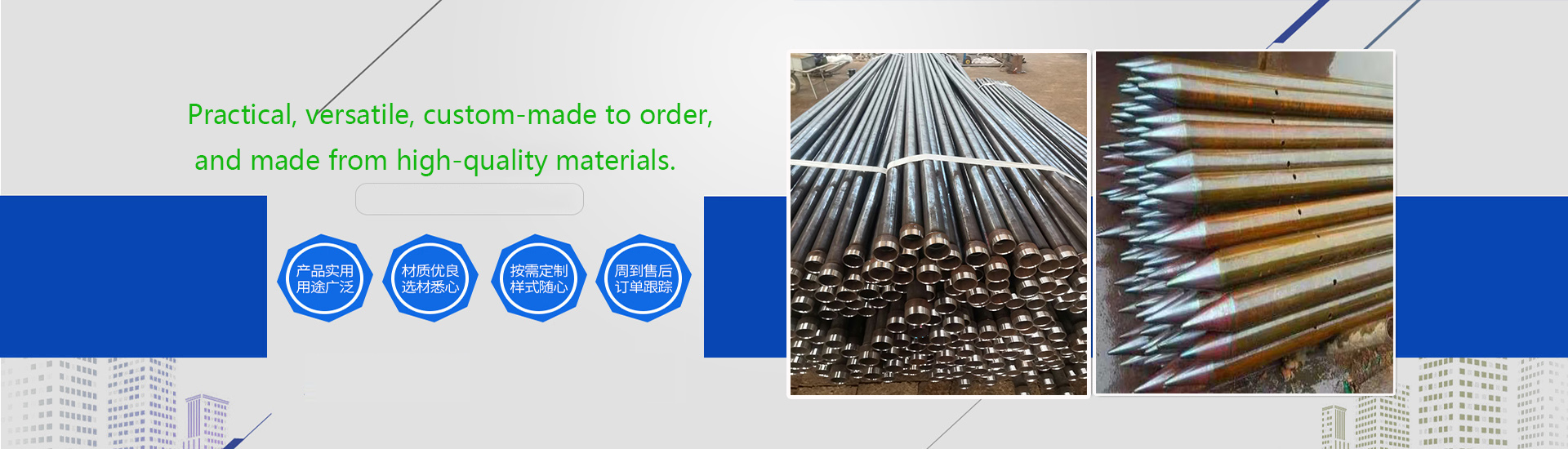
Sonic test tubes embedded within these pile foundations play a pivotal role in ensuring their integrity. By analyzing the propagation of acoustic waves through the piles, engineers can detect any anomalies, such as cracks, voids, or areas of poor compaction, that could compromise the foundation's strength and stability. These tubes, often crafted from durable materials like high-grade steel or specialized plastics, are designed to withstand the harsh conditions encountered deep underground, including high pressures, corrosive soils, and extreme temperatures.
The non-destructive nature of sonic testing allows engineers to assess the pile foundations without the need for excavation or other invasive methods, which can be both time-consuming and costly. Moreover, the data gathered through sonic test tubes can be used to verify the quality of construction, ensuring that the piles meet the required design specifications and standards. This, in turn, contributes to the overall safety and longevity of the high-rise building, providing peace of mind to both engineers and occupants.(Back to“2.1 High-Rise Buildings”)
1.2 Plastic Acoustic Testing Tubes for Small-Scale Civil Engineering
While high-rise buildings demand the utmost in structural integrity, smaller-scale civil engineering projects, such as residential developments, roadways, and drainage systems, also require accurate assessment of soil conditions and foundation quality. For these projects, plastic acoustic testing tubes offer a cost-effective and lightweight alternative to their steel counterparts.
These plastic tubes are designed with ease of installation and removal in mind, making them ideal for projects where time and labor costs are critical factors. Their lightweight nature also reduces transportation and handling costs, further contributing to their cost-effectiveness. Despite their lower cost, plastic acoustic testing tubes do not compromise on performance. They are capable of assessing soil conditions, detecting voids, and monitoring the compaction of backfill materials with a high degree of accuracy.
The versatility of plastic acoustic testing tubes makes them a popular choice among contractors working on a wide range of small-scale projects. Whether it's ensuring the stability of a residential foundation, verifying the compaction of roadway sub-base materials, or monitoring the performance of a drainage system, these tubes provide reliable data that helps engineers make informed decisions and ensure the quality of construction.(Back to“2.3 Slope Stabilization”)
1.3 Steel Sonic Test Tubes with Double-Seal Hydraulic Connection
In certain environments, such as deep excavations, bridge abutments, and marine constructions, the conditions can be extreme, with high pressures and the need for absolute fluid integrity being paramount. In these scenarios, steel sonic test tubes with double-seal hydraulic connections stand out as the ideal choice.
These tubes are engineered to withstand the harsh conditions encountered in such environments, with their robust steel construction providing the necessary strength and durability. The double-seal hydraulic connection design ensures a leak-proof connection, preventing any contamination of the test fluid and ensuring accurate test results. This is particularly important in applications where the purity of the test fluid is critical, such as in marine constructions where saltwater could otherwise corrode the tubes or affect the test data.
The use of steel sonic test tubes with double-seal hydraulic connections in these extreme environments provides engineers with the confidence that their testing will be both accurate and reliable. This, in turn, contributes to the overall safety and success of the project, whether it's a deep excavation for a new underground structure, a bridge abutment supporting a heavy traffic load, or a marine construction project exposed to the corrosive effects of saltwater.(Back to“1.1 Advanced Composites”)
1.4 Anti-Blockage Sonic Test Tubes for Muddy Ground Conditions
Muddy or soft ground conditions present unique challenges for sonic testing, as debris and sediment can easily clog traditional tubes, disrupting the flow of acoustic waves and compromising the accuracy of the test results. To overcome this obstacle, anti-blockage sonic test tubes have been developed, featuring specialized filters or self-cleaning mechanisms that maintain optimal flow even in the most challenging environments.
These tubes are designed to prevent the accumulation of debris and sediment, ensuring that the acoustic waves can propagate uninterrupted through the ground. The specialized filters trap larger particles while allowing the test fluid and acoustic waves to pass through, while the self-cleaning mechanisms periodically remove any buildup of debris, preventing blockages from occurring.
The use of anti-blockage sonic test tubes in muddy or soft ground conditions provides engineers with reliable data that accurately reflects the ground conditions. This is particularly important in applications such as geotechnical investigations, where accurate data is essential for designing foundations and other structures that will be subjected to the stresses and loads imposed by the ground. By ensuring uninterrupted acoustic wave transmission and reliable data collection, anti-blockage sonic test tubes contribute to the overall success and safety of civil engineering projects in challenging ground conditions.(Back to“3.1 Blockage”)
2. Maintenance and Troubleshooting
2.1 How to Clean Blocked Sonic Test Tubes After Construction
Post-construction, sonic test tubes, integral components in assessing the integrity of civil engineering structures, may face the challenge of blockage. This blockage often stems from the accumulation of debris, sediment, or even construction residues within the tubes, hindering the accurate transmission of acoustic waves and thus compromising the test results. To restore the functionality of these tubes and ensure the reliability of subsequent tests, effective cleaning methods are imperative.
(1)High-Pressure Water Jetting
One of the most efficient and widely adopted methods for cleaning blocked sonic test tubes is high-pressure water jetting. This technique involves directing a powerful stream of water at high velocity into the tube, dislodging and flushing out any obstructions. The pressure and flow rate of the water can be adjusted according to the severity of the blockage and the material of the tube, ensuring a thorough yet gentle cleaning process that minimizes the risk of tube damage.
High-pressure water jetting offers several advantages. It is a non-invasive method that does not require the disassembly or removal of the tube, saving time and labor costs. Additionally, it is environmentally friendly, as it does not involve the use of harsh chemicals or generate hazardous waste. Moreover, the high-pressure water stream can reach even the most inaccessible areas within the tube, ensuring a comprehensive cleaning effect.
(2)Mechanical Brushing
For more stubborn blockages or when high-pressure water jetting is not feasible, mechanical brushing presents an effective alternative. This method involves inserting a specialized brush or scraper into the tube and manually or mechanically rotating it to dislodge and remove the obstructions. The brush or scraper can be designed to match the inner diameter of the tube, ensuring a snug fit and optimal cleaning efficiency.
Mechanical brushing is particularly useful for removing hardened deposits or scale that may have formed on the inner walls of the tube. It allows for precise control over the cleaning process, enabling the operator to target specific areas of concern. However, care must be taken to avoid excessive force or abrasion, which could damage the tube's inner surface and compromise its structural integrity.
(3)Preventive Measures
In addition to reactive cleaning methods, implementing preventive measures can significantly minimize the risk of blockage in sonic test tubes. Installing protective covers or screens at the tube's entrance can effectively filter out larger debris and sediment, preventing them from entering the tube in the first place. These covers or screens should be regularly inspected and cleaned to ensure their continued effectiveness.
Another preventive strategy is to opt for anti-blockage designs when selecting sonic test tubes. These tubes incorporate features such as self-cleaning mechanisms, specialized filters, or enlarged inlets and outlets to facilitate the smooth flow of fluids and reduce the likelihood of blockage. While these designs may come at a slightly higher cost, they offer long-term benefits in terms of reduced maintenance requirements and improved test accuracy.
2.2 Treatment for Corrosion in Acoustic Testing Tubes
Corrosion, a pervasive issue in metal tubes exposed to moisture, chemicals, or other corrosive environments, poses a significant threat to the accuracy and lifespan of acoustic testing tubes. Corrosion not only weakens the structural integrity of the tube but also introduces contaminants that can interfere with acoustic wave transmission, leading to inaccurate test results. Therefore, implementing effective corrosion treatment and prevention strategies is crucial.(Back to“1.2 Corrosion-Resistant Alloys”)
(1)Corrosion-Resistant Coatings
One of the primary methods for mitigating corrosion risks in acoustic testing tubes is the application of corrosion-resistant coatings. These coatings, which can be epoxy, polyurethane, or other specialized formulations, form a protective barrier on the tube's surface, shielding it from direct contact with corrosive substances. The choice of coating depends on the specific environmental conditions the tube will be exposed to, as well as the desired level of protection and durability.
Corrosion-resistant coatings offer several benefits. They are relatively easy to apply and can be customized to meet specific project requirements. Additionally, they provide long-lasting protection, extending the lifespan of the tube and reducing the need for frequent replacements. However, it is essential to ensure that the coating is applied correctly and maintained regularly to prevent any breaches or degradation that could compromise its effectiveness.
(2)Material Selection
Another critical factor in preventing corrosion in acoustic testing tubes is the selection of appropriate materials. Stainless steel, for instance, is known for its excellent corrosion resistance and is widely used in applications where exposure to moisture or chemicals is expected. Other materials, such as titanium or certain alloys, may also offer superior corrosion resistance depending on the specific environmental conditions.
When selecting materials for acoustic testing tubes, it is essential to consider not only their corrosion resistance but also their mechanical properties, cost, and availability. The chosen material should be able to withstand the expected loads and stresses while maintaining its structural integrity over time. Additionally, it should be compatible with the testing methods and equipment used, ensuring accurate and reliable test results.
(3)Regular Inspections and Maintenance
Regular inspections and maintenance are vital for detecting and addressing corrosion issues in acoustic testing tubes before they escalate into more significant problems. Inspections should be conducted at regular intervals, focusing on areas prone to corrosion, such as welds, joints, and areas exposed to moisture or chemicals. Any signs of corrosion, such as discoloration, pitting, or scaling, should be promptly addressed through cleaning, repair, or replacement of the affected sections.
In cases of severe corrosion that compromises the structural integrity of the tube, replacement or repair may be necessary. When replacing a corroded tube, it is essential to ensure that the new tube meets the same specifications and standards as the original, including material, dimensions, and corrosion resistance. Repairs, on the other hand, should be carried out by qualified personnel using appropriate methods and materials to ensure the restored tube's integrity and performance.
3. Applications Beyond Testing
Sonic test tubes, renowned primarily for their pivotal role in acoustic testing within the realm of civil engineering, extend their utility far beyond this core function. These versatile tubes have found innovative applications in grouting and support systems, transforming the way engineers approach soil stabilization, load-bearing enhancement, and underground construction safety. Let's delve deeper into these expanded applications, exploring how sonic test tubes, in the form of perforated grouting pipes and tunnel roof support pipes, are revolutionizing the industry.
3.1 Perforated Grouting Pipes: Enhancing Soil Stability and Load-Bearing Capacity
Perforated grouting pipes represent a sophisticated adaptation of sonic test tube technology, tailored specifically for the purpose of injecting cementitious or chemical grouts into the ground. This process, known as grouting, is instrumental in improving soil stability and increasing its load-bearing capacity, thereby providing a solid foundation for various construction projects.
The design of perforated grouting pipes is ingenious, featuring a series of strategically placed perforations along their length. These perforations allow the grout to seep out gradually and uniformly into the surrounding soil, filling voids, fractures, and weak zones. As the grout cures and hardens, it binds the soil particles together, creating a more cohesive and stable mass. This enhanced soil structure is better equipped to withstand the stresses and loads imposed by structures such as buildings, bridges, and retaining walls, reducing the risk of settlement, subsidence, and structural failure.
The applications of perforated grouting pipes are diverse and widespread. In the construction of high-rise buildings, these pipes are used to stabilize the soil beneath the foundation, ensuring that the immense weight of the structure is evenly distributed and supported. For infrastructure projects like bridges and tunnels, perforated grouting pipes play a crucial role in reinforcing the soil around the foundations and abutments, preventing erosion and maintaining structural integrity. Additionally, in slope stabilization projects, these pipes are employed to inject grout into the slope face, increasing its shear strength and reducing the likelihood of landslides.
The installation of perforated grouting pipes requires precision and expertise. Engineers must carefully select the appropriate pipe size, perforation pattern, and grout mixture based on the specific soil conditions and project requirements. The pipes are typically installed using drilling equipment, with the grout injected under pressure to ensure thorough penetration and distribution. Monitoring the grouting process is essential to verify that the desired level of soil improvement has been achieved.
3.2 Tunnel Roof Support Pipes: Ensuring Safety in Underground Constructions
Underground constructions, such as tunnels and mines, present unique safety challenges due to the inherent risk of collapses and ground instability. Tunnel roof support pipes, another innovative application of sonic test tube technology, provide a reliable solution for reinforcing tunnel linings and preventing accidents.
These pipes are designed to withstand the dynamic loads and pressures exerted by the surrounding soil and rock. They are typically made of high-strength materials like steel or reinforced concrete, ensuring durability and resilience in harsh underground environments. The modular design of tunnel roof support pipes allows for easy installation and adjustment, accommodating various tunnel geometries and support requirements.
The installation process of tunnel roof support pipes involves drilling holes into the tunnel roof at predetermined intervals, inserting the pipes, and securing them in place with grout or other fastening methods. The pipes are then connected to form a continuous support system that distributes the loads evenly across the tunnel roof, reducing the stress on any single point. This system acts as a safety net, preventing collapses and ensuring the stability of the tunnel lining even under extreme conditions.
Tunnel roof support pipes offer several benefits beyond their primary function of preventing collapses. They enhance worker safety by providing a secure working environment, reducing the risk of accidents and injuries. These pipes also extend the lifespan of underground constructions by minimizing wear and tear on the tunnel lining, reducing the need for frequent repairs and maintenance. Furthermore, they can be used in conjunction with other support systems, such as rock bolts and shotcrete, to create a comprehensive and robust support solution.
In conclusion, the applications of sonic test tubes beyond acoustic testing are vast and transformative. Perforated grouting pipes and tunnel roof support pipes represent just two examples of how this versatile technology is being harnessed to improve soil stability, enhance load-bearing capacity, and ensure the safety of underground constructions. As civil engineering projects continue to grow in complexity and scale, the demand for innovative solutions like these will only increase, driving further advancements in sonic test tube technology and its applications.(Back to Tunnel Roof Support Pipes: Ensuring Safety in Underground Constructions)
Conclusion
Sonic test tubes play a vital role in modern civil engineering, offering a non-destructive, efficient, and reliable means of assessing structural integrity. By understanding the various types, maintenance requirements, and applications of these tubes, engineers and construction professionals can optimize their use, ensuring the safety and durability of their projects.

admin
No comments for this content