
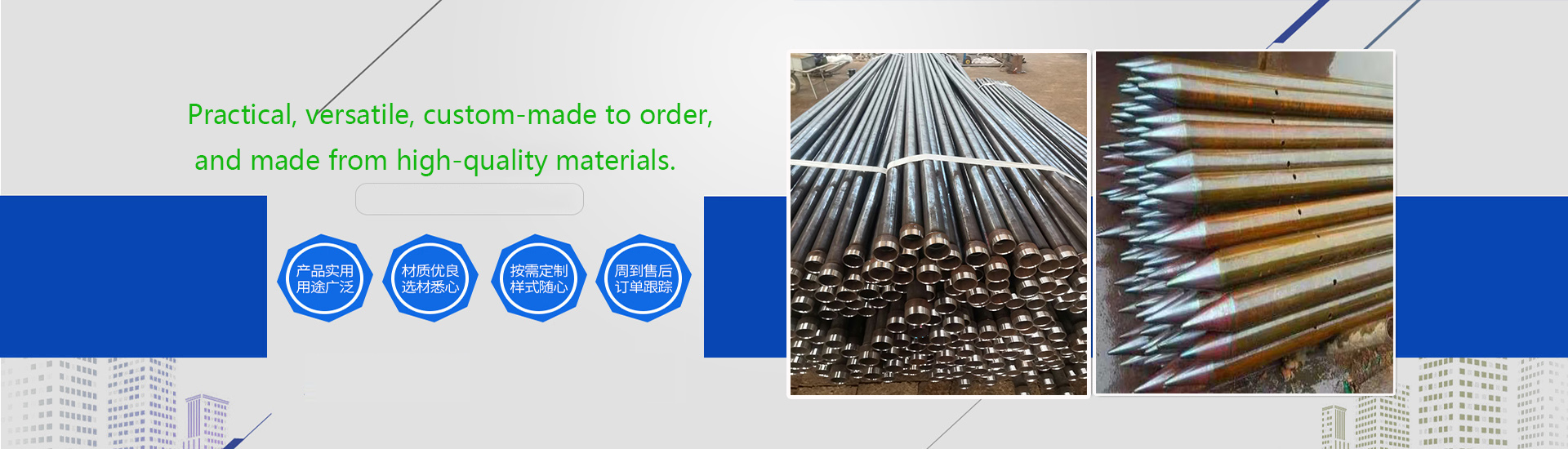
集群文章1:Carbon Steel Sonic Pipes: Balancing Cost and Durability in Geotechnical Applications
Introduction
In the realm of geotechnical engineering, where the stability and integrity of deep foundations are paramount, the choice of materials for sonic logging pipes plays a crucial role. Among the various options available, carbon steel sonic pipes have emerged as a popular choice due to their unique balance of cost and durability. These pipes are not only economically viable but also possess the necessary strength and resilience to withstand the harsh conditions often encountered in geotechnical applications. This article delves into the distinctive characteristics of carbon steel, explores its advantages, and discusses the considerations engineers must make when selecting these pipes for their projects.
1.Material Properties
Carbon steel, an alloy primarily composed of iron and carbon, exhibits a range of properties that make it suitable for geotechnical applications. One of its most notable attributes is its strength. Carbon steel pipes possess high tensile and yield strength, enabling them to withstand substantial loads and pressures without deforming or breaking. This strength is particularly crucial in sonic logging, where pipes must maintain their structural integrity while transmitting sound waves through various soil and rock strata.
Another significant property of carbon steel is its malleability. While it is strong, carbon steel can also be formed and shaped into pipes of different diameters and thicknesses with relative ease. This malleability allows for customization to meet specific project requirements, ensuring optimal performance in diverse geotechnical settings.
However, carbon steel is not without its drawbacks. One of the primary concerns is its susceptibility to corrosion. When exposed to moisture, oxygen, and certain chemicals present in soil and groundwater, carbon steel can undergo oxidation, leading to rust and degradation over time. This corrosion can compromise the structural integrity of the pipes, reducing their lifespan and potentially affecting the accuracy of sonic logging data.
2.Corrosion Protection
To mitigate the risk of corrosion, various methods have been developed to protect carbon steel pipes. One common approach is the application of coatings. Epoxy coatings, for instance, provide a barrier between the steel and the surrounding environment, preventing moisture and chemicals from coming into direct contact with the metal. These coatings are durable and can withstand the abrasive forces encountered during pipe installation and use.
Another effective corrosion protection method is cathodic protection. This technique involves connecting the carbon steel pipes to a more active metal, such as zinc or magnesium, which acts as a sacrificial anode. The anode corrodes preferentially, protecting the cathode (the carbon steel pipe) from corrosion. Cathodic protection is particularly useful in environments with high levels of chloride ions, such as coastal areas or regions with saline groundwater, where traditional coatings may be less effective.
The effectiveness of these corrosion protection methods varies depending on the specific environment in which the pipes are used. For example, in dry, arid regions, coatings may provide sufficient protection, while in wet, corrosive environments, a combination of coatings and cathodic protection may be necessary to ensure the longevity of the pipes.
3.Cost-Benefit Analysis
When selecting materials for geotechnical projects, engineers must consider not only the initial cost but also the long-term maintenance and replacement costs. Carbon steel pipes offer a compelling cost-benefit proposition. Initially, they are often more affordable than alternative materials such as stainless steel or plastic, making them an attractive option for budget-conscious projects.
However, the true value of carbon steel pipes lies in their long-term performance. When properly protected against corrosion, these pipes can have a lifespan of several decades, reducing the need for frequent replacements and associated costs. In contrast, pipes made from less durable materials may require more frequent maintenance or replacement, leading to higher overall costs over the project's lifecycle.
Scenarios where carbon steel pipes offer the best value include projects with moderate to high loads and pressures, where their strength is essential, and environments where corrosion can be effectively managed through coatings or cathodic protection. In such cases, the initial cost savings combined with the long-term durability of carbon steel pipes make them a cost-effective choice.
4.Case Studies
Real-world examples further illustrate the success of carbon steel sonic pipes in geotechnical applications. In a large-scale infrastructure project in a coastal city, engineers opted for carbon steel pipes protected with a combination of epoxy coatings and cathodic protection. Despite the challenging corrosive environment, the pipes have performed admirably, providing accurate sonic logging data and maintaining their structural integrity over several years.
Another case study involves a mining project in a remote, arid region. Here, the engineers chose carbon steel pipes with epoxy coatings due to their cost-effectiveness and the relatively low risk of corrosion. The pipes have successfully withstood the rigors of installation and use, contributing to the overall success of the project.
In both cases, the decision-making process involved a thorough assessment of the project requirements, environmental conditions, and cost considerations. By selecting carbon steel pipes with appropriate corrosion protection measures, the engineers were able to achieve a balance between cost and durability, ensuring project success.
Conclusion
Carbon steel sonic pipes offer a cost-effective and durable solution for many geotechnical applications. By understanding the material's properties, implementing effective corrosion protection measures, and considering the full lifecycle costs, engineers can make informed decisions that ensure the success of their projects. Whether in coastal cities, arid regions, or other challenging environments, carbon steel pipes, when properly selected and protected, can provide reliable performance and long-term value.

admin
No comments for this content